A Regional Bulletin Moves Into a Lit Studio: Marcus's First Week
Marcus runs a small online news outlet and needed a proper studio for a weekly bulletin. Rachel Hollis tells how the set, autocue and three cameras came together in a single booked day.
6 minutes to read
The call that started it
Marcus edits a small online news outlet covering Devon, and for two years his weekly bulletin had been recorded in a spare office with a window behind the presenter. The light changed every hour, the sound carried an echo, and the presenter read from a phone propped on a shelf. He rang us in the middle of autumn, a few weeks before a local council story he knew would draw a larger audience than usual.
His request was plain: he wanted the bulletin to look like television without becoming a production he could not manage himself. He had one presenter, a short script and a Thursday deadline. He did not ask about equipment lists. He asked whether one day in a studio could produce a bulletin and two interview segments he would be happy to publish.
I took the call, and my first questions were about the running order rather than the kit. How long was the bulletin, who spoke, and did any guests join in person? Those answers decide how a set is lit, where the cameras sit and how much rehearsal time the day needs.
Planning the set around the script
Before anyone arrived, we agreed the shape of the day. The bulletin ran at roughly six minutes, with a presenter at a desk, followed by two seated interviews of about four minutes each. That gave us two set arrangements: a desk with a clean backdrop, and a pair of chairs angled towards each other with a softer background.
Marcus sent his script two days ahead, which let us load it into the autocue and check the line lengths. Long sentences read badly off a prompter, and we marked a few places where a breath would fall naturally. He rewrote three lines in an evening and the bulletin improved for it.
We also asked what he wanted the viewer to see behind the presenter. He chose a plain dark panel with a single soft light, nothing busy. A simple background keeps attention on the face and makes graphics easier to read when they are added in the edit.
- Script supplied two days before the shoot
- Two set arrangements agreed in advance
- Plain backdrop chosen to keep attention on the presenter
Lighting, sound and the three cameras
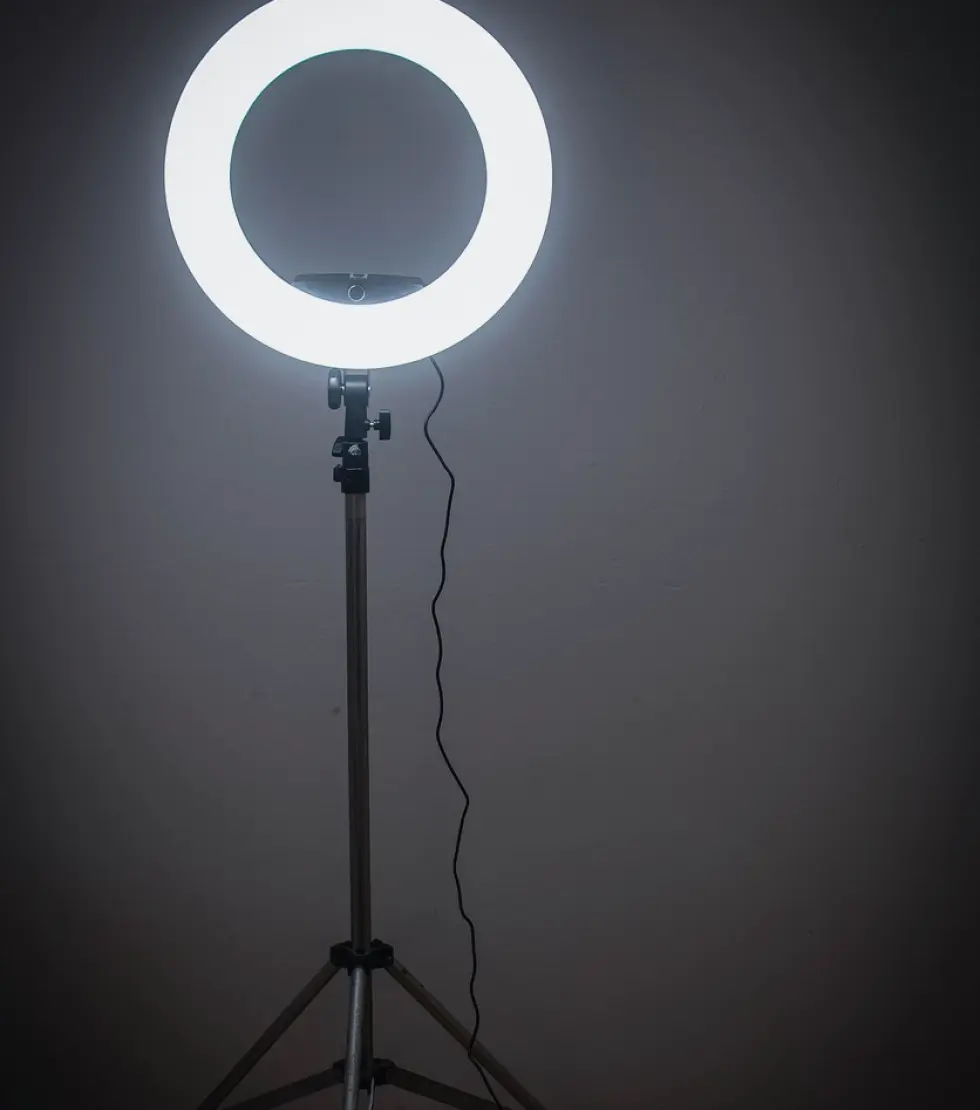
On the morning, the studio crew set the lights first, because everything else depends on them. A key light sat slightly above eye level, a fill light softened the shadows, and a small light behind the presenter separated her from the backdrop. Window light was blocked completely, so the look would not drift across the afternoon.
We used three cameras: a wide shot of the desk, a medium shot on the presenter and a second medium shot for the interview guest. Recording all angles at once means the edit is a matter of choosing between them, not stitching together retakes. It also keeps the conversation natural, since nobody repeats an answer for a second camera.
Sound was checked before any picture was judged. Each speaker wore a small clip microphone, and we listened through headphones while the presenter read a few lines, adjusting levels until the voice sat clear of the room tone.
Autocue and a presenter who had never used one
Marcus's presenter, Hannah, had read from paper and phones for years and was wary of the autocue. We gave her twenty minutes before recording to read the script off the screen, with the speed set slower than she expected and then nudged up until it felt like her own pace.
The common mistake with a prompter is staring at it, so the eyes look fixed. We asked her to read as though telling the story to one person standing just behind the lens, and to glance down at her notes between items. By the third take the delivery had loosened and the pauses landed where the script intended.
The operator followed her speed live, slowing the text when she stumbled and holding it while she looked up. That small human control is why we keep an operator on the prompter rather than leaving the scroll running on its own.
- Twenty minutes of practice before recording
- Reading speed set by the presenter, not the script
- Operator follows the presenter live
Interviews that sounded like conversation
The two interview segments were with a local councillor and a business owner affected by the council's decision. Both guests arrived early, which we always encourage, so they could sit in the chair, hear their microphone and settle before the cameras rolled. Nervous guests loosen up when the room is quiet and unhurried.
Marcus conducted the interviews himself from the second chair, and the camera on him gave us reaction shots for the edit. We kept one rule: no question was asked twice for the camera's sake. If an answer ran long, the editor would trim it, and the second medium shot let us cut cleanly without a visible jump.
Both segments finished within the planned time. We watched a short playback with Marcus on the monitor before the guests left, so any unclear answer could be re-recorded while they were still in the building.
What Marcus took away
By late afternoon we had the bulletin and both interviews recorded, and Marcus left with the footage organised by camera and take, ready for the edit. He told me the biggest difference was not the lighting but the calm: nobody was waiting for the sun, the echo or a phone to cooperate.
He now books a studio day roughly once a month and records several bulletins in a single session, using the same two set arrangements. That repetition keeps the look consistent for his viewers and keeps his costs predictable, which matters more to a small outlet than any single flourish.
The lesson I draw from his case is a modest one. A studio does not need to be elaborate to help. A decent plan, a tidy set and a presenter who feels prepared will do most of the work before the first camera is switched on.
- Footage handed over sorted by camera and take
- Regular monthly sessions with the same two sets
Marcus came to us wanting his bulletin to look like television, and what he got was a repeatable routine: a script sent ahead, a set that never changes, three cameras recording at once and an autocue operator who follows the presenter. If you run a small outlet and are weighing up a studio day, start with your running order. Everything else follows from how long you speak and who is in the room.